
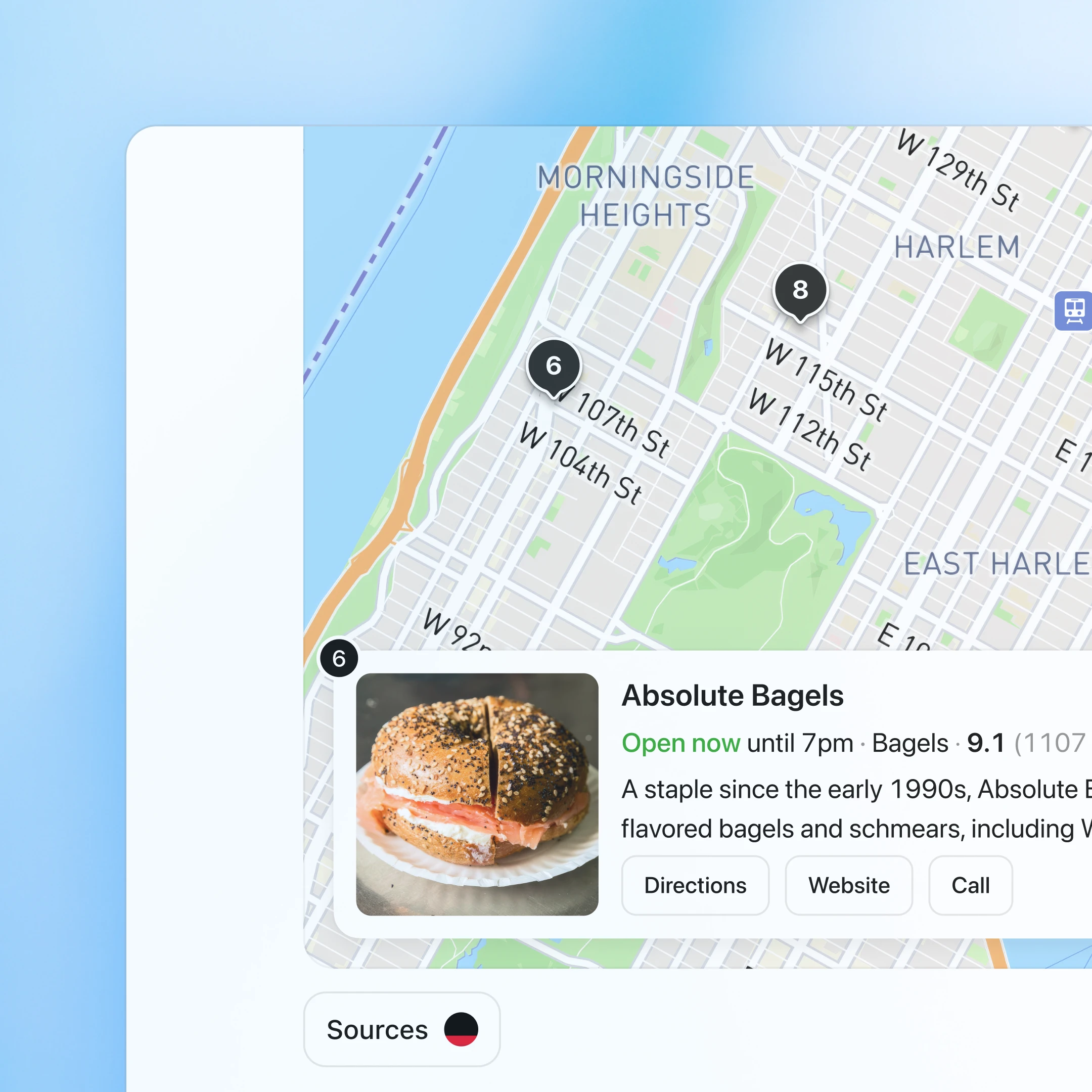
A map pin is the display, not the explanation
OpenAI documents map results on iOS and Android. It also describes using search partners and rewriting questions into search queries. Approximate IP location, optional device location and relevant memory can influence local searches. None of that identifies the source of every business detail or provides a formula for local placement. OpenAI says search placement is not guaranteed. ChatGPT search documentation.
Keep these distinctions when investigating a result:
| What you see | What you need to establish |
|---|---|
| A map and a pin | Which location is represented, and what attribution the interface actually displays |
| A business card | Whether the name, branch, address and contact route describe the same business |
| A claim about the business | Which linked source, if any, supports that particular claim |
| A recommendation | The customer's stated needs and the conditions attached to the advice |
| A booking option | Which provider, branch, date and party size the option belongs to |
This is a troubleshooting framework, not a disclosed account of OpenAI's internal pipeline. The sources reviewed for this guide do not establish a universal map renderer or complete listing database. A map logo would not, by itself, tell you why a business was recommended. Nor does a citation elsewhere in the answer establish where every card field came from.
Keep Google Business Profile, Yelp and your own site in the picture
Google allows verified profile owners to update addresses, hours, contact details and photos. That remains a useful customer-facing responsibility. It is not evidence that Google Business Profile is the source of a particular ChatGPT card. Google's profile-editing guidance.
Our recommendation is to maintain the records your business already uses: its website, relevant directory listings and service providers. Compare them at the location level. A chain's corporate name is not enough if a customer needs the branch with step-free access or Saturday appointments.
Make one page on your own site a clear reference for each location. Include its real name, address or service area, current hours, contact route and relevant services. Give temporary changes an effective date. For a restaurant, make the current menu and booking destination easy to find. These are information-quality recommendations; we have not measured whether they change ChatGPT selection.
Do not buy a directory subscription solely because someone promises it will put a pin on ChatGPT's map. Ask what the provider actually supplies, to which surface, and with what evidence. A data relationship, a referral link and paid promotion are different offers.
Check website access without confusing search and training
OpenAI documents OAI-SearchBot for search and GPTBot for potential model-training use. Their controls are independent: a site can allow search crawling while declining training crawling. OpenAI also recommends allowing its published searchbot IP ranges through the website's host or content delivery network. OpenAI crawler documentation.
Ask your website team to check the actual location page, its crawler rules and the response it receives. Record a blocked request or an error as an access problem. Do not turn a successful fetch into a claim that the page is indexed, recommended or used to populate a map. Our citation and crawler-access audit explains how to keep those checks separate.
Treat booking as another check
OpenAI names OpenTable, Resy and Yelp as possible sources of restaurant availability. Access depends on the consumer plan and model; the reviewed documentation excludes Work, Business, Enterprise and Edu. Check its current eligibility details before treating an unavailable feature as a missing business listing. Restaurant-search requirements.
For a business already using one of these services, inspect the correct branch and a real date, time and party size in the provider's own system. An accurate description can coexist with no suitable appointment or table. Do not create a booking or join a waitlist merely to test whether a link works. A recommendation, an available slot and a confirmed reservation should remain separate outcomes in your records.
Turn a bad result into a correction you can verify
Save the exact customer question, date, city or neighborhood, visible business card, answer and linked URLs. Note the device and any known location or memory settings. Avoid comparing an unspecified “near me” result on one person's phone with a named-city search on someone else's laptop as though only the business changed.
Then isolate the problem. If the hours are wrong, compare the quoted hours with the linked page and the records you control. Correct an outdated record through its normal owner workflow and retain the before-and-after evidence. If the answer remains wrong despite accurate sources, record that discrepancy rather than inventing an explanation for it. Our wrong prices and hours checklist gives a more detailed correction log.
If the only issue is absence, there may be no factual correction to make. Record the customer's need, which businesses appeared and what the answer said about their fit. That creates a useful basis for later observation. It does not establish that a changed listing, new schema or more reviews will secure placement.
The practical goal is to make the right business information available and make errors traceable. You can verify those improvements directly, while keeping the still-unknown selection mechanics out of your promises.